AI Search Optimization: What It Is and How Small Businesses Can Start
What AI search optimization is, how it differs from classic SEO, common myths and a simple 30 day starter plan for small businesses.
Innovision Code Team 9 min read
AI search optimization is a new name for a familiar goal: helping the right people find and trust your business when they ask a question. This time, the question may be typed into Google, spoken to an assistant or asked in a chat with an AI tool.
This guide explains the idea in plain words, shows how it differs from classic SEO, clears up a few common myths and ends with a simple 30 day starter plan. There is no secret trick here, only good habits that a small business can begin this month.
In this guide
- What AI search optimization is
- AI search optimization compared with classic SEO
- What a small business can do
- What this looks like in practice
- Common myths about AI search optimization
- A two minute readiness check
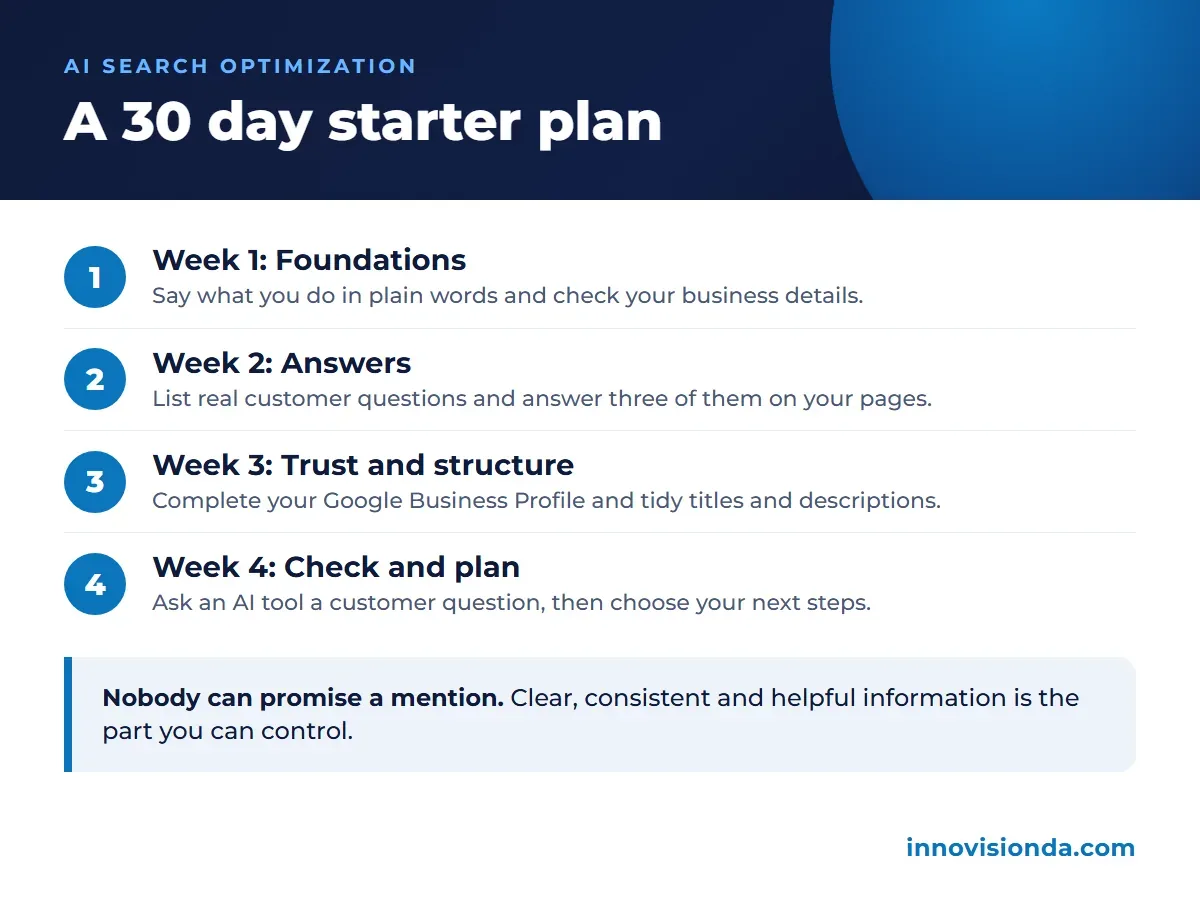
- A 30 day starter plan for AI search optimization
- Your next step
What AI search optimization is
AI search optimization means making your business easy for search tools and AI assistants to understand, so that you have a fair chance of being found and mentioned when someone asks a question. It is not a trick, and it is not a guarantee. It is a set of good habits, and most of them will already sound familiar.
AI tools often give a short answer instead of a list of links. To build that answer, they can draw on information from many places, such as websites, business profiles and trusted sources. A business that explains itself clearly and consistently is easier to understand, and that is the heart of this guide.
Nobody controls what an AI tool says, and nobody can promise a mention. What you can control is the quality, clarity and consistency of the information you publish.
AI search optimization compared with classic SEO
Classic SEO helps your pages appear in a list of results. AI search often shows a summary, sometimes with links beneath it. The goals overlap far more than they differ.
- What stays the same. Helpful content written for people, a clear structure, fast and mobile friendly pages, and trust signals such as real names and honest reviews.
- What deserves extra attention. Direct, plain answers to customer questions, and consistent business details wherever your business is listed.
- What you do not need. Google's documentation on AI features and your website says that standard SEO best practices apply, with no special optimization and no special markup or extra files required.
That same page explains that a page needs to be indexed and eligible to appear in ordinary Google Search with a snippet, so the technical basics still matter. If you would like a closer look at how clear your pages are, our guide to a website content evaluation gives you a simple checklist.
What a small business can do
Here are the actions that make the biggest difference for most small businesses. None of them needs special software.
Say what you do in plain words
Your home page should explain what you offer, who it is for and where you work. Clear sentences are easier for people and for AI tools to understand, so avoid vague phrases that could describe any business.
Answer real customer questions
Write down the questions customers ask by phone and email, then answer them honestly on your pages and in a short FAQ.
Keep your details consistent
Use the same business name, address, phone number and opening hours on your website, your Google Business Profile and any directories. Small differences can confuse both people and tools.
Complete your Google Business Profile
A complete profile helps local customers find you, and it gives search tools a trusted source of facts about your business.
Check the technical basics
Make sure your pages can be found by search engines, load quickly and work well on a phone. A beautiful page that cannot be reached helps nobody.
Show trust
Use real names, real photographs and honest reviews, and keep your pages up to date. People decide quickly whether a business feels real, and AI tools can only describe what you publish.
A helpful pause. Many of these basics can be checked in a few minutes. Our free website analysis reviews speed, search and contact, so you can see where your website stands before you start.
What this looks like in practice
Imagine a small landscaping company in Essex County. Its home page says that it offers a wide range of outdoor solutions. A customer, or an AI tool, learns very little from that sentence. A clearer version says that the company designs, builds and maintains residential gardens and patios in Windsor and Essex County. It names the service, the type of customer and the place.
The company then answers three real questions on its pages: how a project starts, how long it takes and what the care plan covers. It lists the same name, address and phone number on its Google Business Profile and on its website. Nothing here is a trick. Each step simply makes the business easier to understand, which is the practical meaning of AI search optimization.
Common myths about AI search optimization
- Myth: you need special markup or secret files. Google's documentation says that no special markup, AI text files or extra requirements are needed for its AI features.
- Myth: a secret trick guarantees a mention. Nobody can guarantee what an AI tool says. Be cautious of anyone who promises it.
- Myth: classic SEO no longer matters. Pages still need to be indexed and eligible to appear in search, so the foundations remain important.
- Myth: more pages are always better. A few helpful, clear pages usually serve customers better than many thin ones.
- Myth: it is a one time job. Information changes, so a little steady care works better than one big push.
Each myth has the same kind of answer: clear, honest and helpful information is the part you can control, and it is worth the effort. If you ever hear a promise that sounds too good to be true, ask for the details in writing and take your time before you decide.
A two minute readiness check
Give yourself one point for every statement that is true today.
- My home page says what I do, who it is for and where I work.
- My pages answer the questions customers really ask.
- My business name, address, phone number and hours are the same everywhere.
- My Google Business Profile is complete.
- My website loads quickly and works well on a phone.
- My pages show real names, photographs and honest reviews.
Five or six points means you have strong foundations, and the plan below will keep them fresh. Three or four points means a few focused weeks will make a clear difference. Two points or fewer simply tells you where to begin, which is useful on its own.
A 30 day starter plan for AI search optimization
Four short weeks are enough to begin. Choose the pace that suits your business, and remember that steady progress is the goal.
Week 1: Foundations
Write one clear paragraph that says what you do, who it is for and where you work, and put it at the top of your home page. Check that your business name, address, phone number and hours are the same everywhere.
Week 2: Answers
List ten questions your customers really ask. Answer the three most common ones on your service pages or in a short FAQ.
Week 3: Trust and structure
Complete your Google Business Profile, welcome genuine reviews from happy customers and check that each page has its own clear title and description.
Week 4: Check and plan
Ask an AI tool a question your customers might ask, and notice what it says. Then choose your next steps, such as one new helpful page each month. Results take time, and nobody can promise a particular outcome.
Your next step
AI search optimization does not need to feel mysterious. With plain words, honest answers and consistent details, you give search tools and AI assistants a clear picture of your business, and you give customers a better experience too. Start small, stay steady and let the habits of AI search optimization grow with you.
A free website analysis is a friendly first step. It shows you how your website looks today and helps us suggest the best way forward. When you are ready for more, our AI SEO page and our ChatGPT visibility page explain how we can help.
Get your free website analysis
Prefer to talk first? You can request a free growth plan and tell us about your business.
Frequently asked questions
What is AI search optimization?
AI search optimization is the practice of making your business clear, consistent and easy to understand, so that search tools and AI assistants have a fair chance of finding and mentioning it. It builds on good SEO habits.
How is it different from classic SEO?
Classic SEO focuses on ranking pages in a list of results. AI search often shows a summary, so direct answers and consistent business details deserve extra attention. The foundations are the same.
Do I need special markup or files for AI search?
Google's documentation says that no special markup or extra files are required for its AI features. Standard SEO best practices apply.
Can anyone guarantee that an AI tool will mention my business?
No. Nobody controls AI answers. You can improve the clarity, quality and consistency of your information, and that gives you a fair chance.
How long does it take to see results?
It varies. Small, steady changes made over weeks and months work better than one large push, and nobody can promise a specific result.
Where should a small business start?
Begin with the 30 day plan in this guide, and use a free website analysis to see how your website looks today.