Marketing Automation for Small Business: Where to Start
A friendly guide to marketing automation for small business: what to automate first, a 7 step starter plan and a short note on Canada's anti spam law.
Innovision Code Team 9 min read
Most small business owners are busy. Follow ups, reminders and newsletters matter, yet they are the first things to slip when the week gets full. Marketing automation for small business is a gentle answer: you decide once what should happen, and a system takes care of the routine part, so that you can spend your time on real conversations.
This guide explains what to automate first, gives you a 7 step starter plan, and adds a short, plain note on Canada's anti spam law. You do not need to be technical to begin.
In this guide
- What marketing automation for small business means
- Five things to automate first
- A 7 step starter plan for marketing automation for small business
- A short note on Canada's anti spam law
- Common mistakes to avoid
- How to tell whether it is working
- A two minute readiness check
- Your next step
What marketing automation for small business means
Marketing automation is a simple idea. When something happens, such as a new enquiry or a booked appointment, a message or task is sent automatically at the right moment. You write the rules and the words once, and they keep working.
It does not replace the warmth of a real person. The best automation feels like a thoughtful assistant that remembers to say hello on time, and it leaves you free for the conversations that need you.
Imagine a customer who fills in your contact form on a Saturday morning. Without automation, the message waits until Monday. With marketing automation for small business, the customer receives a friendly confirmation within minutes, and you receive a notification. You still write the personal reply, but the customer already knows that you have their message.
For many owners, the biggest benefit is consistency. Every new enquiry receives a prompt reply, every appointment receives a reminder and every happy customer is gently invited to leave a review.
Five things to automate first
If you are starting with marketing automation for small business, these five tasks are friendly places to begin. Choose one, and add another when the first is working well.
1. Lead follow up
When someone sends an enquiry, a quick, friendly reply shows that you care. An automatic first reply can confirm that you received the message and say when they will hear from you. Our guide to lead follow up in Ontario goes into more detail.
2. Appointment reminders
A short reminder the day before helps people remember, and it gives them an easy way to reschedule. That saves you time and keeps your calendar healthy.
3. Review requests
After a job is complete, a polite message can invite the customer to share their experience. Ask every customer in the same kind way, and never pressure anyone.
4. Newsletters
A short monthly note with a helpful tip, a recent project or a seasonal reminder keeps you in mind. Write it once, schedule it, and let it go out on time.
5. Reporting
A simple weekly summary of enquiries, bookings and replies shows you what is working. You make better decisions when the numbers arrive without you having to chase them.
A helpful pause. Before you automate anything, it helps to see how people reach you today. Our free website analysis reviews speed, search and contact in a few minutes, and shows whether your website makes it easy to get in touch.
A 7 step starter plan for marketing automation for small business
Here is a calm way to begin, one step at a time.
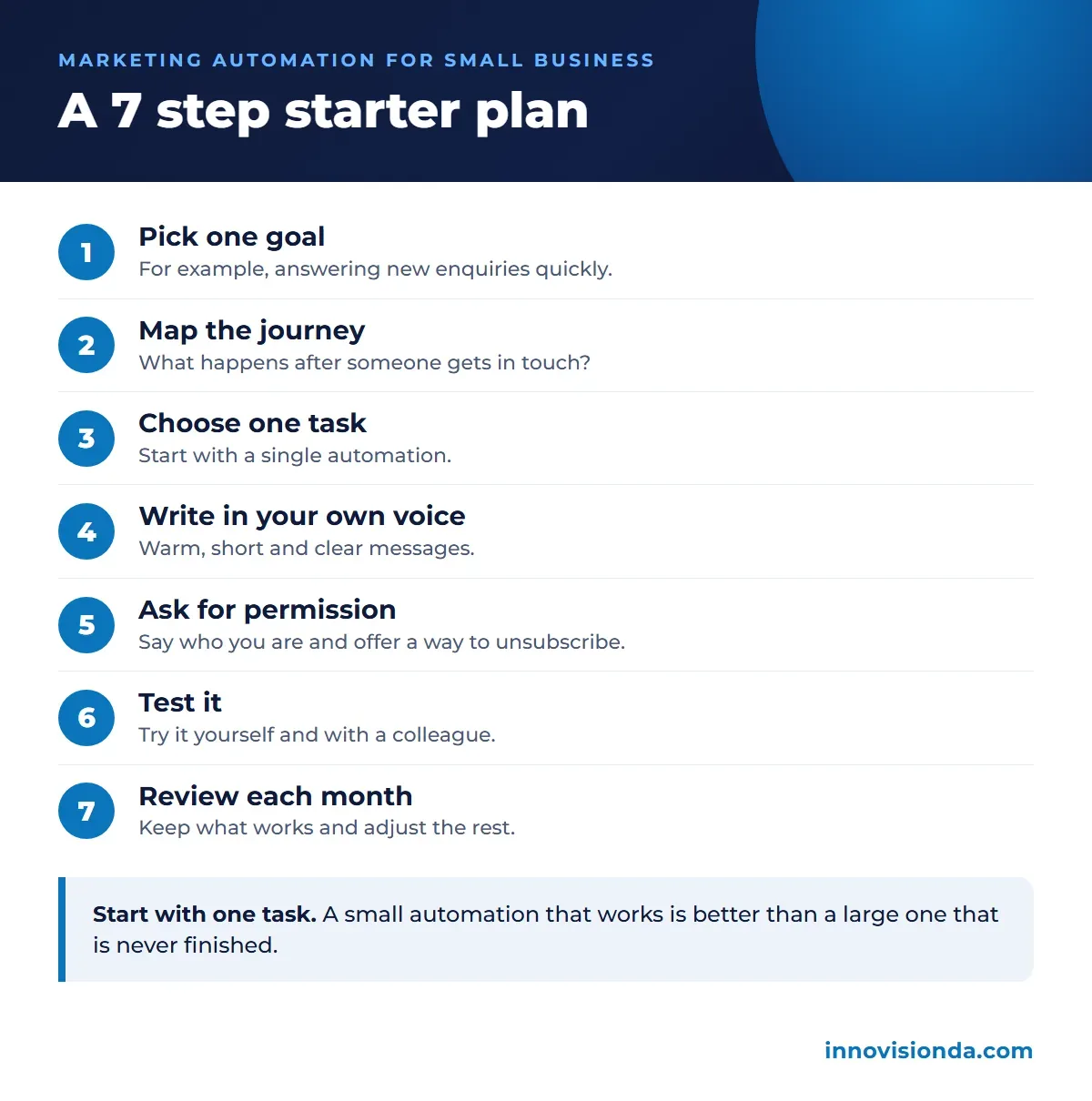
- Pick one goal. For example, replying to every new enquiry within a few minutes.
- Map the journey. Write down what happens after someone gets in touch, from the first message to the finished job.
- Choose one task. Select a single item from the list above, so that you can learn without feeling overwhelmed.
- Write in your own voice. Use short, warm and plain sentences, as you would speak to a customer.
- Ask for permission. Make sure the people you message have agreed to hear from you, say who you are and include a simple way to unsubscribe.
- Test it. Send the messages to yourself and a colleague, and check that the timing and wording feel right.
- Review each month. Look at replies and bookings, keep what works and adjust the rest.
If you would like to see how follow ups can run automatically alongside your contacts, you can read about our Automated CRM, a CRM with automatic follow ups, and our automation services.
A first automation usually takes an afternoon to plan and write, and a few weeks to refine. It is not a big project. It grows one small task at a time, and each one gives you back a little time.
A short note on Canada's anti spam law
If you send marketing emails or texts to people in Canada, Canada's anti spam law, often called CASL, is worth knowing about. It is a law about commercial electronic messages. The Government of Canada page on Canada's anti spam legislation explains that businesses are asked to get permission before sending such messages, and that asking shows respect for privacy and helps your messages reach people who want them.
In plain words, three good habits cover the basics:
- Ask for permission before you send marketing messages, and keep a record of when and how it was given.
- Say clearly who the message is from.
- Include a simple way to unsubscribe, and respect it promptly.
Some situations, such as a recent customer relationship, can count as implied permission for a limited time, and there are exceptions. This note is general information and not legal advice, so please check the details with the Government of Canada guidance or a lawyer for your own situation. Careful marketing automation for small business always starts with respect for the people receiving the message.
Common mistakes to avoid
Most problems with automation come from moving too fast, not from the tools themselves. These are the ones to watch for:
- Automating too much at once. Start with one task and learn from it.
- Sounding like a robot. Read each message aloud, and rewrite anything that you would not say to a customer.
- Forgetting permission. Consent, a clear sender and an unsubscribe option belong in every marketing message.
- Setting it and forgetting it. Look at the results each month, and update messages when your offers change.
- Removing the human. Automation should open conversations, and a real person should always be ready to continue them.
How to tell whether it is working
You do not need a complicated report. Look at three simple things each month: how quickly you reply to new enquiries, how many booked appointments are kept and how many reviews arrive. If you save time and your customers feel looked after, it is working.
Marketing automation for small business should feel lighter for you and warmer for your customers. If a message feels cold, change the words. If a reminder arrives at an awkward time, change the timing. Small adjustments are a normal and healthy part of the process.
A two minute readiness check
Before you begin marketing automation for small business, give yourself one point for every statement that is true.
- I know the one goal I would like to improve first.
- I know what happens after a customer gets in touch.
- I can describe my customers in a sentence or two.
- I have a list of people who agreed to hear from me.
- I can write a short, warm message in my own voice.
- I have time to review the results once a month.
Five or six points means you are ready to start. Three or four points means a short plan will help you fill in the gaps. Two points or fewer simply shows where to begin, and that is helpful too.
Your next step
Marketing automation for small business works best when it is small, warm and steady. Choose one task, write it in your own voice, ask for permission and review the results each month. Before long, the routine part of your marketing will run quietly in the background.
A free website analysis is a friendly first step, because marketing automation for small business works best when your website already makes it easy to get in touch. It shows you how your website looks today and how easy it is for customers to reach you, which helps us suggest the best way forward. If you would like more, we will prepare a free growth plan.
Get your free website analysis
Prefer to talk first? You can request a free growth plan and tell us about your business.
Frequently asked questions
What is marketing automation for small business?
Marketing automation for small business means setting up routine marketing tasks, such as follow ups, reminders and newsletters, so that they happen automatically at the right moment. You write the rules and the words once.
What should I automate first?
Start with lead follow up, because a quick and friendly first reply matters to customers. Then consider appointment reminders, review requests, newsletters and a simple weekly report.
Will automation make my messages feel impersonal?
Not if you write them in your own voice and keep them short and warm. Use automation for the routine part, and let a real person continue the conversation.
Do I need permission to send marketing emails in Canada?
In general, businesses are asked to get permission before sending commercial electronic messages, to say who the message is from and to include an unsubscribe option. Please check the Government of Canada guidance or a lawyer for your own situation.
How do I know whether it is working?
Look at replies, bookings and enquiries each month. If they improve or stay steady while you save time, the automation is doing its job.
Do I need technical skills to start?
No. Begin with one simple task and a clear message. We are happy to help you plan it.